


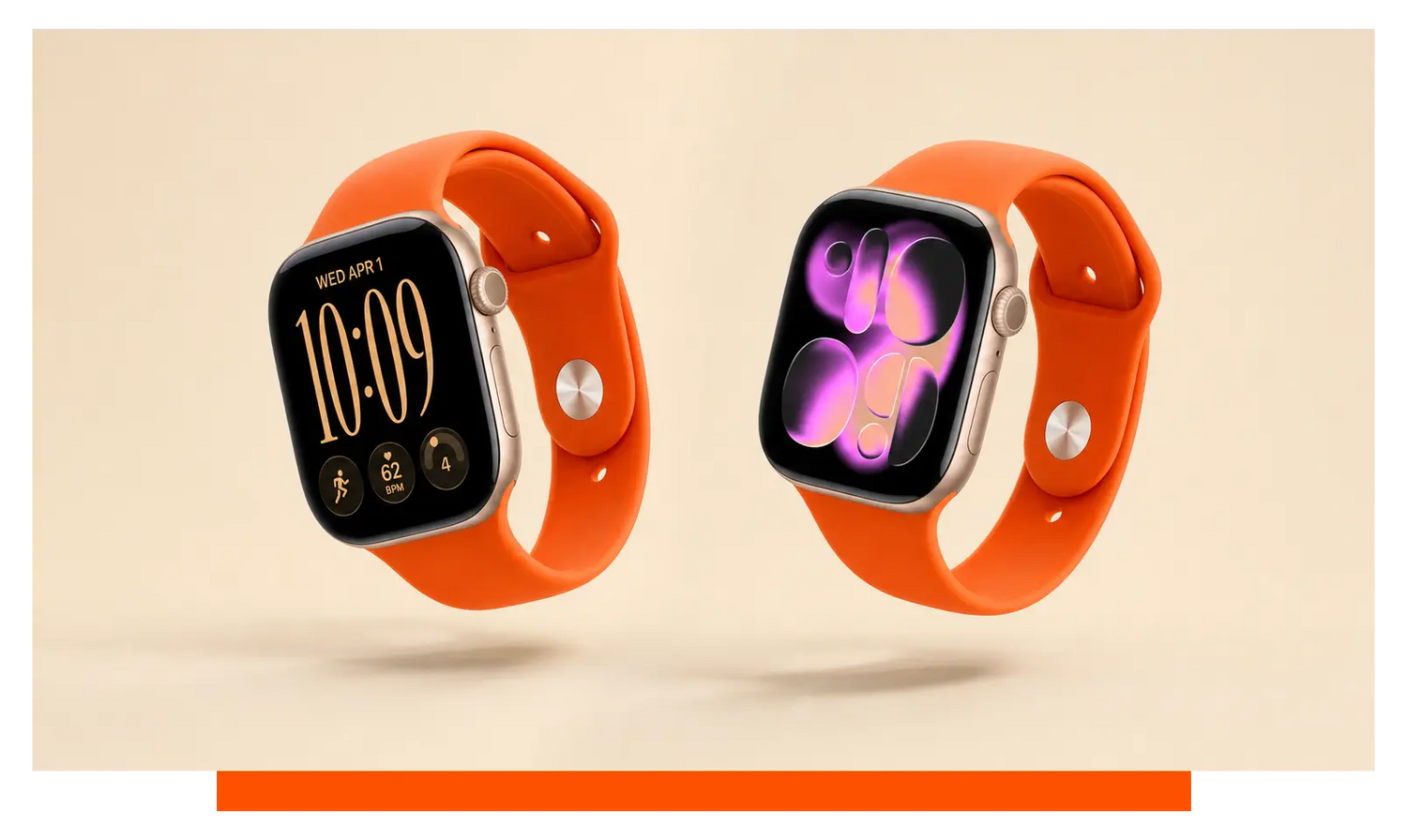
Comparison of the Apple Watch Series 12 and 11
Choose Apple Watch 12 if its more frequent health sensing and daily readiness score will genuinely change how you train, sleep or recover. Apple Watch 11 is the smarter buy when meaningfully discounted because it delivers much the same everyday experience. The deciding factor is whether you will act on the newer health and recovery data.
On this page
Use these links to jump straight to the part of the comparison that matters to you.
The short version
Apple Watch 12 earns its premium through health and recovery tools rather than a radically different everyday watch experience.
- Choose Apple Watch 12 for training guidance: its Health Sensing System checks heart rate every 5 seconds and produces a 0-10 daily readiness score.
- Choose Apple Watch 11 for value: it remains the stronger deal when a reputable retailer discounts it meaningfully below Apple Watch 12.
- Outdoor workouts favour Apple Watch 12: it offers up to 10 hours of GPS workout tracking, against up to 8 hours for Apple Watch 11.
- Everyday battery is a draw: both are rated for up to 24 hours, so the newer watch does not remove routine charging.
- Check your iPhone before paying for intelligence features: Apple Watch 12 requires an Apple Intelligence - enabled iPhone for the relevant features, with language and regional availability also affecting what you can use.
- Fit is very similar: both offer 42mm and 46mm cases, making strap material and adjustment more important than the small case differences for comfort.
The deciding trade is simple: Apple Watch 12 gives you more actionable recovery data, while a discounted Apple Watch 11 preserves most of the familiar experience for less.
Apple Watch 12 vs Apple Watch 11 specifications compared
Apple Watch 12 leads in health sensing, readiness, workout endurance and cover-glass durability, while Apple Watch 11 matches its core display, storage and everyday battery specifications.
The listed prices below were read at the time of writing.
| Specification | Apple Watch 12 | Apple Watch 11 |
|---|---|---|
| Health Sensing System | Yes | No |
| Readiness and recovery | 0-10 daily score | No |
| GPS workout battery | Up to 10 hours | Up to 8 hours |
| Apple Intelligence requirements | Apple Intelligence - enabled iPhone | No |
| Fast charging | 15 minutes for up to 12 hours | 15 minutes for up to 8 hours |
| Case glass durability | Ceramic Shield 2 | Ion-X front glass |
| Case materials | Aluminium, titanium, ceramic | Aluminium, titanium |
| Processor | S11 chip | S10 chip |
| Case dimensions and weight | 42 × 37 × 9.7mm; 32.2g | 42 × 36 × 9.7mm; 30.3g |
| Low Power Mode battery life | Up to 38 hours | Up to 36 hours |
| Price | £369 | £369* |
| Case sizes | 42mm, 46mm | 42mm, 46mm |
| Display brightness | 2000 nits | 2000 nits |
| Display type | Always-On Retina LTPO3 | Always-On Retina LTPO3 |
| Battery life | Up to 24 hours | Up to 24 hours |
| Storage | 64GB | 64GB |
| Water resistance | 50m | 50m |
| Health tracking | ECG app | ECG app |
| Sports tracking | Multisport workout | Multisport workout |
| Smartwatch features | Apple Pay | Apple Pay |
The table reinforces the central choice: pay for Apple Watch 12 when its recovery guidance will influence your behaviour, not merely because it is newer.
*price listed as new. The Apple Watch 11 is now available at a lower price at several retailers.
Is Apple Watch 12’s newer health sensing worth it?
Apple Watch 12’s newer health sensing is worth paying for when you will use its readings to adjust training, recovery or everyday habits.
Its Health Sensing System measures heart rate every 5 seconds, giving the watch more frequent background information to work with. Apple Watch 12 then turns its health and activity signals into a 0-10 daily readiness score. That is the clearest practical difference between these watches.
Readiness can be useful if you train several times a week, monitor heart-rate trends closely or often struggle to judge whether fatigue is physical, sleep-related or temporary. Instead of opening several graphs and interpreting them yourself, you receive a daily indication designed to help shape the intensity of your day.
The value still depends on your response. If a lower readiness score would persuade you to swap a hard session for an easier one, prioritise sleep or look more closely at recent trends, Apple Watch 12 can support better decisions. If you normally close activity rings, record a walk and then ignore the health detail, the feature may become another screen you rarely open.
Apple Watch 11 is not bare-bones health hardware. It retains familiar tools such as the ECG app and supports the everyday activity and sleep experience many buyers actually want. What it lacks is the newer sensing system and its readiness layer.
On your wrist, the difference is guidance rather than basic recording: Apple Watch 12 tries to tell you what your recent data means for today, while Apple Watch 11 is better suited to someone happy to review conventional health and activity results.
Apple Watch 12 vs Apple Watch 11: GPS workout battery
Apple Watch 12 is the better option for long phone-free workouts, with up to 10 hours of GPS tracking rather than up to 8 hours on Apple Watch 11.
That difference matters most to walkers, hikers, endurance runners and cyclists whose sessions can stretch across much of a day. It also gives you more breathing room when you begin a workout without a completely full battery. For an ordinary run or gym session, either watch has ample quoted workout endurance.
GPS workout battery should not be confused with normal battery life. This figure concerns sustained outdoor workout tracking, where the watch is doing more work than it would while showing notifications or recording everyday movement. If your longest phone-free event approaches the limit of Apple Watch 11, Apple Watch 12 provides the safer margin.
Think about your longest real session, not an imagined future challenge. Apple Watch 11 remains entirely practical if none of your workouts comes close to exhausting up to 8 hours of tracking. Apple Watch 12 earns its advantage when you regularly stay out longer or dislike planning a mid-event charge.
What you would notice is less battery anxiety near the end of an all-day route, not a dramatic change during a normal morning run.
Apple Intelligence and Audio Intelligence
Apple Watch 12 is the watch to choose for its newer intelligence features, but only when your paired iPhone, language and region support them.
The important requirement sits partly away from your wrist: relevant Apple Watch 12 features need an Apple Intelligence - enabled iPhone. Buying the watch does not make an unsupported iPhone compatible, and feature availability can still depend on your language and region.
Audio Intelligence is another reason to consider Apple Watch 12 if you expect to use its newer audio-led capabilities. Yet this should be treated like readiness. A feature has value when it changes what you do; its presence on a specification sheet is not enough.
Apple Watch 11 avoids that particular dependency because it does not offer the corresponding Apple Intelligence feature set. That can make it a cleaner-value purchase for someone who mainly wants notifications, payments, workouts and health records rather than the latest intelligence functions.
Before choosing, check the iPhone you plan to keep using and the features available to you. In daily life, compatibility is the difference between a useful tool and an unavailable menu item.
Apple Watch 12 vs Apple Watch 11: fast charging
Apple Watch 12 makes a short charging stop more productive, delivering up to 12 hours from 15 minutes rather than up to 8 hours on Apple Watch 11.
This is especially relevant if you wear your watch overnight. A brief charge while showering or getting ready can cover more of the next stretch, reducing the need to leave the watch off your wrist for long. That helps preserve sleep and recovery records, which in turn makes Apple Watch 12’s readiness feature more useful.
Apple Watch 11 still replenishes quickly enough to fit around many routines. If you already have a reliable daily charging habit, the difference may not alter your experience. The newer watch is more forgiving when you remember late or need to leave home soon.
This is one place where the central argument reinforces itself: faster top-ups matter more on Apple Watch 12 because consistent wear supplies the health system with the information used for readiness. You would feel the benefit as a larger usable buffer after the same brief stop at the charger.
Cover glass, materials and processor
Apple Watch 12 has the stronger design specification, pairing Ceramic Shield 2 with a broader choice of aluminium, titanium and ceramic cases.
Apple Watch 11 uses Ion-X front glass and comes in aluminium or titanium. It remains a well-finished watch, but Apple Watch 12 is the more attractive choice if knocks against gym equipment, door frames or desk edges are a regular concern. Tougher cover glass cannot prevent every mark, though it improves the case for wearing the watch through demanding daily routines.
The ceramic case option also belongs solely to Apple Watch 12 in this comparison. Aluminium remains the practical everyday material, while titanium will appeal if you prefer a more premium case. Your case choice affects appearance and feel, but the health system remains the more consequential reason to pick the newer model.
Inside, Apple Watch 12 uses the S11 chip and Apple Watch 11 uses the S10 chip. Both support the smooth, glanceable Apple Watch experience expected for notifications, payments and workouts. The newer processor matters chiefly as part of Apple Watch 12’s newer feature platform; it is not, by itself, a reason for a content Apple Watch 11 buyer to pay more.
The difference you are most likely to appreciate is confidence in the newer cover glass, particularly if you train or commute without treating your watch delicately.
Apple Watch 12 vs Apple Watch 11: everyday battery life
Everyday battery life is effectively level, with both Apple Watch 12 and Apple Watch 11 rated for up to 24 hours.
That shared figure is important because it prevents the newer model from being an automatic recommendation. Apple Watch 12 goes farther during GPS workouts and gains more use from a short charge, but its normal-use rating does not surpass Apple Watch 11.
Low Power Mode produces a smaller distinction: up to 38 hours for Apple Watch 12 and up to 36 hours for Apple Watch 11. This is useful during travel, long days away from a charger or occasional forgotten top-ups. It is not a substitute for deciding whether the newer health system is useful to you.
Battery results in practice depend on how often you track workouts, use the display and call on connected features. The quoted ratings nevertheless show the broad shape of the comparison: Apple Watch 12 improves demanding workout use and quick charging, not the standard headline duration.
Day to day, you should expect a similar charging rhythm from either watch; Apple Watch 12 simply handles long outdoor sessions and hurried top-ups better.
Display, storage and everyday smartwatch features
Apple Watch 12 and Apple Watch 11 provide the same core display, storage and payment specifications, so these should not decide the purchase.
Both use an Always-On Retina LTPO3 display rated at 2000 nits. That gives each watch the same quoted peak brightness and a screen you can glance at without deliberately waking it. Whether you are checking directions on a bright commute or looking at pace during an outdoor session, neither model has a specification advantage here.
Storage is also equal at 64GB. Both support Apple Pay, keeping the familiar ability to pay from your wrist. These shared fundamentals explain why Apple Watch 11 can remain such an attractive alternative when discounted: the things you touch repeatedly still feel closely matched.
The processor and newer intelligence layer separate the models behind the scenes, but routine interactions are not transformed simply by moving to Apple Watch 12. If notifications, payments, timers and music control dominate your use, price should carry more weight than novelty.
In ordinary use, you would see the same bright display capacity and have the same storage allowance; Apple Watch 12’s real gains appear when you move into health guidance and longer tracked workouts.
Fitness tracking, health tools and water resistance
Both watches cover mainstream fitness and water use well, while Apple Watch 12 adds the more useful interpretation of recovery data.
Apple Watch 12 and Apple Watch 11 each support multisport workouts, the ECG app and water resistance to 50m. Those shared capabilities make either model suitable for buyers mixing gym work, running and everyday activity recording.
The distinction is not whether Apple Watch 11 can track exercise. It can. Apple Watch 12 is better at placing recent health and recovery signals around that exercise, helping an engaged athlete judge what to do next. That supports the thesis of this comparison: the upgrade is about acting on information, not gaining basic access to workouts.
If your training plan already comes from a coach or you prefer to judge recovery by feel, the extra layer may overlap with a system you trust. If you train independently and value a consistent daily prompt, readiness has a clearer role.
At the pool or during a mixed week of workouts, the watches offer much the same foundation. The newer model becomes distinct after the session, when its health system can make recovery trends easier to use.
Case fit, comfort and strap choice
Neither watch has a decisive fit advantage, because both come in 42mm and 46mm sizes and comfort will depend more on your chosen strap and adjustment.
Using the smaller cases as a direct reference, Apple Watch 12 measures 42 × 37 × 9.7mm and weighs 32.2g, while Apple Watch 11 measures 42 × 36 × 9.7mm and weighs 30.3g. Apple Watch 11 is the lighter of the pair, but the shared thickness and closely related footprint mean strap pressure, breathability and fastening position are likely to have more effect during sleep or sweaty training.
For a small wrist, begin with the 42mm case and a strap that allows fine adjustment. A soft strap worn securely rather than tightly can reduce shifting during heart-rate recording without leaving the watch uncomfortably clamped to your skin.
For both models there are many watch straps available on the market. The Apple Watch 12 once again uses the same attachment mechanism as the previous models. You will find straps in nylon, silicone, leather, metal and titanium. The full Apple Watch 12 straps range covers those material families, as does the collection of Apple Watch 11 Straps.
- Sweaty training: Apple Watch 12 silicone straps are the practical place to start because the material is easy to wipe down.
- Overnight wear: Apple Watch 12 nylon straps offer a softer, more flexible alternative when fine adjustment matters.
- Work and smarter outfits: Apple Watch 12 leather straps provide a more traditional watch appearance.
- A jewellery-like finish: the verified Apple Watch 12 metal straps range includes Milanese and other metal styles.
If your skin reacts to prolonged watch wear, material choice deserves as much attention as case size; our guide to which Apple Watch bands are best for eczema-prone skin goes deeper into that decision.
What you will actually feel is the strap against your skin for hours at a time. That makes a well-adjusted, activity-appropriate strap more important to comfort than the narrow dimensional gap between these cases.
Price and overall value
Apple Watch 11 offers better value only when its real retailer price falls meaningfully below Apple Watch 12.
At the time of writing, Apple Watch 12 was listed at £369 by its maker, while Apple Watch 11 was also listed at £369. Yet this is a new price. At those figures, Apple Watch 12 is the straightforward choice because it adds readiness, more frequent health sensing, longer GPS workout tracking, more productive fast charging and tougher cover glass without a listed price penalty.
The answer flips when Apple Watch 11 receives a genuine discount from a several retailers. Its display, normal battery rating, storage, case-size choice, water resistance and core smartwatch functions remain closely matched. A worthwhile saving therefore does not force you to accept a stripped-back everyday experience.
Do not judge the discount in isolation. Ask what you give up for it. If readiness would guide most weeks of training, paying more for Apple Watch 12 can make sense. If you mainly want activity records, sleep information, notifications and payments, the saving on Apple Watch 11 is easier to keep in your pocket.
The practical value test is whether Apple Watch 12’s health guidance will earn regular use. If not, wait for the Apple Watch 11 price gap to become meaningful.
Where Apple Watch 12 is better
Apple Watch 12 wins wherever newer health interpretation, workout endurance and durability matter more than a possible discount.
- Health frequency: heart-rate measurements every 5 seconds.
- Recovery guidance: a 0-10 daily readiness score.
- Phone-free outdoor tracking: up to 10 hours of GPS workout battery.
- Fast charging: 15 minutes provides up to 12 hours.
- Low Power Mode: up to 38 hours.
- Cover glass: Ceramic Shield 2.
- Case choice: aluminium, titanium and ceramic.
Where Apple Watch 11 is better
Apple Watch 11 wins on value and slightly lower small-case weight, particularly when a trustworthy retailer discounts it.
- Discount potential: the better-value choice when priced meaningfully below Apple Watch 12.
- Small-case weight: 30.3g rather than 32.2g.
- Everyday battery: the same up to 24 hours as Apple Watch 12.
- Display: the same 2000-nit Always-On Retina LTPO3 specification.
- Storage: the same 64GB capacity.
- Core features: the same ECG app, multisport workout support and Apple Pay.
- Case choice: the same 42mm and 46mm sizes.
Who should choose which
Choose Apple Watch 12 for actionable health and recovery guidance; choose Apple Watch 11 when saving money matters more than receiving that newer interpretation.
- Choose Apple Watch 12 if you train several times a week and would adjust session intensity after seeing a daily readiness score.
- Choose Apple Watch 12 if you monitor heart-rate and HRV trends closely and value its higher-frequency background sensing.
- Choose Apple Watch 12 if your longest outdoor workouts need up to 10 hours of GPS tracking or you often begin them without a full charge.
- Choose Apple Watch 12 if you own a compatible iPhone and expect to use its Apple Intelligence-dependent features in your supported language and region.
- Choose Apple Watch 11 if it is meaningfully discounted and your priorities are activity tracking, sleep information, notifications, payments and routine workouts.
- Choose Apple Watch 11 if you rarely act on recovery metrics because its shared display, storage and everyday battery specifications cover the familiar Apple Watch experience well.
- Choose Apple Watch 11 if you prefer the lightest smaller case here and the newer ceramic case or tougher cover glass holds little appeal.
For a new buyer at similar prices, Apple Watch 12 is the better-rounded choice; once Apple Watch 11 receives a substantial discount, only buyers who will genuinely use readiness and richer health sensing should pay the difference.
Frequently asked questions
Is Apple Watch 12 worth upgrading to from Apple Watch Series 10 or Apple Watch Series 9?
Upgrade from Apple Watch Series 10 if readiness, more frequent heart-rate and HRV tracking, Audio Intelligence, tougher cover glass or longer outdoor-workout battery would change your use. From Apple Watch Series 9, the move is more compelling because Apple Watch 12 offers up to 24 hours of normal use rather than up to 18 hours, alongside those newer features.
Do I need cellular, or is GPS enough for runs, walks and commuting?
GPS is enough when your iPhone is usually nearby, and disconnected workouts, activity recording, downloaded audio and offline maps still work. Choose GPS + Cellular if you want calls, messages, streaming, live directions and apps without carrying your iPhone or finding Wi-Fi.
Will watchOS updates give Apple Watch 11 the same health features as Apple Watch 12?
No. Software updates cannot add the Health Sensing System that supports Apple Watch 12’s readiness score and higher-frequency background heart-rate and HRV measurements.
Does Apple Watch 12 add blood-pressure monitoring?
No. It provides hypertension notifications that look for patterns linked to possible chronic high blood pressure over 30-day periods rather than taking blood-pressure readings, and that notification feature was already available on Apple Watch 11.
Should long-distance runners choose Apple Watch Ultra 4 instead?
Choose Apple Watch Ultra 4 when your events need the longest possible tracking between charges: it offers up to 45 hours of outdoor-workout tracking, compared with up to 10 hours on Apple Watch 12. For ordinary daily runs, Apple Watch 12 is sufficient when its limit covers your longest session.


Leave a comment
All comments are moderated before being published.
This site is protected by hCaptcha and the hCaptcha Privacy Policy and Terms of Service apply.