


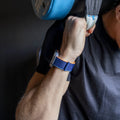






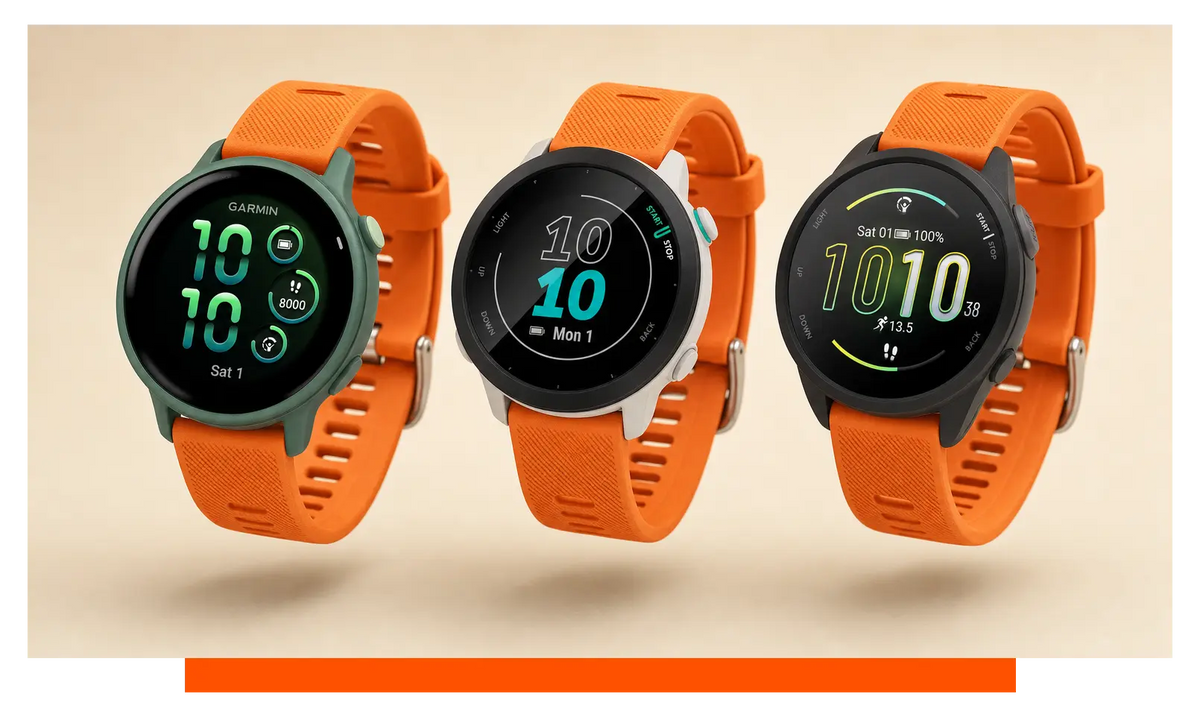
The Garmin Vivoactive 6 is the best Garmin watch for most beginners because it keeps everyday activity, guided workouts and health tracking approachable. Choose the Forerunner 165 instead if running plans and pace guidance are your main reason for buying; it is the more focused first step towards deliberate run training.
Best Garmin watches for beginners at a glance
The Vivoactive 6 is the strongest all-round starting point, but each watch below has a clear role based on how you intend to get fitter.
| Watch | Best for | Deciding feature | GPS battery life | Case dimensions | Case weight |
|---|---|---|---|---|---|
| Garmin Forerunner 55 | First-time runners | PacePro™ | Up to 20 hours | 42 x 42 x 11.6 mm | 37 g |
| Garmin Forerunner 165 | Adaptive run plans | Race Adaptive Training Plans | Up to 19 hours | 43 x 43 x 11.6 mm | 39 g |
| Garmin Vivoactive 6 | Fitness and wellness | Smart wake alarm | Up to 21 hours | 42.2 x 42.2 x 10.9 mm | 23 g (36 g with included band) |
| Garmin Venu 3 | Wrist calls and sleep | Calls and texts via voice | Up to 26 hours | 45 x 45 x 12 mm | 30 g (47 g with included band) |
The device prices below were read at the time of writing.
The deciding point: choose between a watch that guides your running and one you will comfortably wear for varied activity, sleep and daily life.
What makes a good Garmin watch for beginners?
A good first Garmin gives you useful guidance without making the watch feel like another task to manage.
Guidance that matches your goal
Running guidance matters most when you have a clear event, distance or pace in mind. Adaptive plans and race-focused pacing give structure to your sessions, helping you decide how to train rather than merely recording what happened.
That depth is less important if running is only one part of your week. For walking, gym sessions, strength work and general activity, easy access to guided workouts and understandable health trends usually makes a better starting point. You can build consistent habits without feeling pushed towards serious run training.
This is where the choice between the Forerunner 165 and Vivoactive 6 becomes clear. The former centres the experience on running; the latter spreads its attention across everyday movement, workouts and wellness.
Fit you can tolerate day and night
Comfort is not a minor detail. A watch cannot build a useful picture of your activity and sleep if it spends every evening on a bedside table.
Case dimensions tell you how much wrist space the watch occupies, while weight affects how noticeable it feels during workouts and overnight. The Vivoactive 6 has the thinnest case here and weighs 36 g with its included band, making it the natural place to start if sleep tracking or a smaller-feeling watch matters. The Venu 3 gives you the largest display of the group, but its wider case and 47 g weight with the included band will be more noticeable on a slender wrist.
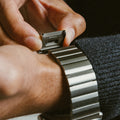
Strap fit also changes the experience. The Forerunner 55, Forerunner 165 and Vivoactive 6 use 20 mm quick-release straps, while the Venu 3 uses 22 mm quick-release straps. That gives you a precise measurement when checking whether an existing band can move to your new watch.
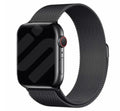
Silicone, nylon, leather, milanese and metal options are available for every watch in this shortlist. A breathable nylon band can make overnight wear feel less intrusive, while silicone is the practical option when sweat, rain or regular swimming are part of your routine.
Battery life that covers your real activities
GPS battery life tells you how long the watch can record an outdoor activity with location tracking switched on. It is more useful than a broad battery claim if you are planning long walks, runs or rides.
There is no weak option here: Garmin rates the four watches for up to 19-26 hours in their stated GPS modes. That is ample for ordinary beginner sessions. The Venu 3 has the longest figure, but battery alone should not push you towards its larger case and broader smartwatch feature set if your activities are much shorter.
Think about charging habits too. A first watch should fit into your week without demanding attention, but there is little benefit in paying for the longest GPS figure when comfort or the right workout guidance will affect you every day.
Health tools you will actually use
Sleep scores, coaching and activity prompts are most useful as patterns, not daily judgements. Beginners often get more value from seeing whether a routine is becoming consistent than from collecting the largest possible set of training metrics.
The Forerunner 55 keeps things relatively simple with a sleep score and everyday activity features. The other watches add broader sleep coaching, while the Vivoactive 6 includes a smart wake alarm and the Venu 3 pairs sleep tools with a more capable voice and calling experience.
That does not make one set of health readings medically authoritative. These features are designed to help you notice habits and trends; they are not replacements for medical assessment.
Best for first-time runners - Garmin Forerunner 55
The Garmin Forerunner 55 is the clearest choice if you want a straightforward running watch that will not bury your first few months of training under advanced metrics.
It keeps the emphasis on running, daily suggested workouts and everyday activity. PacePro™ can help you approach pacing with more structure, while the sunlight-visible MIP display is designed for clear outdoor viewing rather than the richer appearance of the AMOLED screens on the other picks.
- Price: £149.99
- GPS tracking: up to 20 hours
- Running guidance: PacePro™
- Health and sleep: sleep score
- Everyday features: smart notifications
- Payments and stored music: neither is included
Choose it when your priority is starting to run regularly, rather than making contactless payments or storing music on your wrist. Its controls and focused feature set also make sense if you would rather keep your phone as the centre of your everyday digital life.
The 42 x 42 x 11.6 mm case and 37 g listed weight keep it relatively compact. It accepts 20 mm quick-release bands, and the range of Garmin Forerunner 55 straps includes silicone, nylon, leather, milanese and metal options. That breadth is useful if the same watch needs to work for runs, the office and sleep.
The trade-off is focus. If you already know that adaptive race planning will motivate you, the Forerunner 165 is worth stepping up to. If your fitness week mixes runs with classes, walks and strength sessions, the Vivoactive 6 is easier to live with as an all-rounder.
Best for adaptive run plans - Garmin Forerunner 165
The Garmin Forerunner 165 is the better first watch when running is the main reason you are buying and you want guidance that can grow with a specific goal.
Race Adaptive Training Plans, daily suggested running workouts and race-focused pacing tools make it more deliberate than the Vivoactive 6. You are not simply logging miles; the watch can help put each session into a wider plan. That is valuable if you have entered an event or expect running to become the centre of your fitness routine.
- Price: £169
- GPS tracking: up to 19 hours
- Running guidance: Race Adaptive Training Plans
- Health and sleep: sleep coach and nap detection
- Everyday feature: Garmin Pay™
- Display: AMOLED
The 43 x 43 x 11.6 mm case is slightly wider than the Vivoactive 6, while the listed weight is 39 g. It remains a practical size for many runners, but someone with a smaller wrist who intends to track sleep every night may prefer the lighter Vivoactive 6.
Like the Vivoactive 6, it uses 20 mm quick-release bands. Silicone, nylon, leather, milanese and metal Garmin Forerunner 165 straps are available, so you are not tied to a purely sporty look. A nylon option can reduce the clammy feeling some people notice during long wear, while silicone remains easier to rinse after a wet or sweaty session.
You do not need the Music version simply to record a run without your phone. Both versions have built-in GPS. The Music model only becomes relevant when you want downloaded audio through wireless headphones without carrying your phone.
Best for fitness and wellness - Garmin Vivoactive 6
The Garmin Vivoactive 6 is the best first Garmin for most people because it balances guided exercise, health tracking and useful everyday features without turning every activity into run training.
It is particularly well matched to a mixed week. Daily suggested walks can encourage movement on quieter days, while strength plans, strength workouts, on-screen animations and muscle maps support gym sessions. Running is still covered through Daily Suggested Workouts, but it does not dominate the watch.
- Price: £269.99
- GPS tracking: up to 21 hours
- Running guidance: Daily Suggested Workouts
- Health and sleep: sleep coach and smart wake alarm
- Everyday features: Garmin Pay™ and on-device music
- Display: AMOLED
Fit strengthens its case. The case measures 42.2 x 42.2 x 10.9 mm and weighs 23 g, or 36 g with the included band. It is the thinnest option in this group and the lightest with its supplied band, which can make it less distracting when you are sleeping or wearing it throughout a long working day.
The Vivoactive 6 accepts 20 mm quick-release straps. Silicone, nylon, leather, milanese and metal Garmin Vivoactive 6 straps are available, giving you more control over comfort than the case specification alone suggests. Someone who exercises in silicone could switch to nylon for sleep or leather for less active days without replacing the watch.
Choose the Forerunner 165 instead if training plans and race pacing are the reason you want a Garmin. Otherwise, the Vivoactive 6 asks for fewer compromises: it suits walking, gym classes, strength work, sleep tracking and casual running, while still providing music and contactless payments.
Best for wrist calls and sleep - Garmin Venu 3
The Garmin Venu 3 is the best choice here if voice features, a larger display and deeper overnight context matter more than keeping the watch small and simple.
Its speaker and microphone let you handle calls through a paired compatible smartphone, while voice support gives it a more conversational everyday role than the other watches. Sleep coaching and nap detection are joined by overnight skin-temperature trends, which may appeal if you want more context around changes in sleep.
- Price: £379.99
- GPS tracking: up to 26 hours
- Running guidance: Garmin Coach Plans
- Health and sleep: sleep coach and nap detection
- Everyday features: calls, texts and Garmin Pay™
- Display: AMOLED
The extra screen space comes with a larger physical presence. Its case measures 45 x 45 x 12 mm and weighs 30 g, or 47 g with the included band. That can make information easier to glance at, but the Vivoactive 6 is likely to feel less intrusive if you have a smaller wrist or are sensitive to watches during sleep.
The Venu 3 uses 22 mm quick-release straps rather than the 20 mm size used by the other three watches. Check that measurement before reusing an old band. The available Garmin Venu 3 straps include silicone, nylon, leather, milanese and metal, so the larger watch can still be adapted for exercise, work or overnight wear.
This is the premium beginner option, not the default recommendation. Its calling and voice features need to be things you will actually use; otherwise, the Vivoactive 6 covers the central fitness and wellness needs in a lighter package.
How to choose your first Garmin
Choose according to the activity you want help with most, then use case size and weight to break a close tie.
- If you want to begin running without getting lost in metrics: choose the Forerunner 55 for focused guidance and a simpler everyday feature set.
- If you have a race goal or expect running to become your main activity: choose the Forerunner 165 for adaptive plans and more deliberate pace guidance.
- If your week includes walking, gym classes, strength work and some running: choose the Vivoactive 6 for the best balance of fitness, wellness and smartwatch tools.
- If you have a smaller wrist or plan to track sleep every night: start with the lighter, thinner Vivoactive 6.
- If you want wrist calls, voice features and a larger display: choose the Venu 3, provided its larger case suits your wrist.
- If long GPS sessions are the deciding factor: the Venu 3 has the longest stated GPS figure, though every model here covers ordinary beginner workouts comfortably.
For most beginners, the Vivoactive 6 remains the easiest Garmin to wear across exercise, sleep and normal life. The Forerunner 165 takes over when running guidance stops being one useful feature and becomes the main point of the watch.
Frequently asked questions
These final points cover phone-free running, swimming, subscriptions, calling and the limits of Garmin health data.
Do I need the Forerunner 165 Music version to run without my phone?
No. Both Forerunner 165 models have built-in GPS for phone-free run tracking; choose the Music version only if you want downloaded music or playlists through wireless headphones without carrying your phone.
Can Garmin watches track pool swimming and open-water swimming?
Yes, but support differs: the Forerunner 165, Vivoactive 6 and Venu 3 track pool and open-water swimming, while the Forerunner 55 tracks pool swimming without open-water swim metrics. All four have a 5 ATM rating suitable for swimming and showering, but not scuba diving.
Does Garmin require a subscription for workouts, sleep tracking or Garmin Coach?
No. Sleep tracking, existing Garmin Connect features and Garmin Coach plans are free; Garmin Connect+ is an optional service for extra insights and guidance.
Can the Venu 3 make and receive calls without my phone?
No. The Venu 3 uses its built-in speaker and microphone for calls only while connected to a paired compatible smartphone, so it is not a standalone calling watch.
Are Garmin health readings medical-grade?
No. Garmin describes its health and activity readings as close estimates, and its wearables are not medical devices for diagnosing, treating, curing or preventing disease.








Leave a comment
All comments are moderated before being published.
This site is protected by hCaptcha and the hCaptcha Privacy Policy and Terms of Service apply.